Once Upon a Time: A Family Headed West

Today is Pioneer Day where I live. There is a grand parade with the theme: “Like, Learn, Love Pioneers”. The celebration is in honor of the Mormon pioneers led by Brigham Young who arrived in the valley in 1847. Today’s post is dedicated to my elementary school teacher Rhea Guild, who grew up in Midway, Utah and came to New England where our paths crossed in my second grade classroom. Her family history included her pioneer Swiss ancestors who first settled in northern Utah. I remember her telling us stories of rain storms that began with enormous hailstones and I believe she introduced my class to today’s book.

Little House on the Prairie by Laura Ingalls Wilder Originally published in 1935, this edition illustrated by Garth Williams c1953. HarperTrophy Edition c1971.

The West That No Longer Exists might be the second title for today’s blog. Laura Ingalls Wilder understood that the world she knew as a child was already gone, and that future generations would not know what it was like to wrest a living from the land the hard way, clearing a place for crops, building your own simple house, keeping your family fed through long winters with no Safeway in sight. It is a bit startling to realize that Mrs. Wilder was still alive when the generation of baby boomers began to be born. Garth Williams met with Laura Ingalls Wilder when he began work on the illustration for the Little House Books.

Mrs. Wilder’s books became controversial in 2018, when the ALSC, a branch of the American Library Association removed her name from the Laura Ingalls Wilder Award, an award for lifetime achievement which was named after her and which was first presented to her in 1954. The ALSC said they were concerned about racist and stereotypical elements in the books. They couldn’t very well ban her books, since ALA sponsors Banned Books Week every fall. Little House on the Prairie is perhaps the worst offender in their eyes, since characters, including young Laura herself said, “The only good Indian is a dead Indian” several times. In another chapter Laura is surprised that the doctor who finds them and saves their lives when the whole family is taken ill is black.

Should you read or allow your children to become acquainted with these books? Is not an effective way to learn about attitudes and thinking of the past to read books written by contemporaries? There are statements in Little House on the Prairie that we would not say today. Today we are also not intending to vacate the former Indian Territories. Children deserve the whole story. Is the Pioneer experience not a part of the American Story?

In re-reading Little House on the Prairie, I found evidence of sympathy for and a will to understand a bit of the lives of the Osage people that were the Ingalls’ neighbors. When some of the settlers fear a massacre because they hear drums and war cries coming from the creek bottoms nearby at night, Pa is told by an Osage leader that his people were against attacking them and the tribes that disagreed were leaving the area. “No matter what Mr. Scott said, Pa did not believe that the only good Indian was a dead Indian.” Yes, Ma feared the Indians, but Pa takes Laura and Mary to see an abandoned Indian camp and shows them how food was cooked and interprets moccasin tracks in the sand. At the end of the book the Ingalls family watch a daylong passage of Osage stream by, heading west. Here again are the author’s words:

“It was dinner-time, and no one thought of dinner. Indian ponies were still going by, carrying bundles of skins and tent-poles and dangling baskets and cooking pots….Then the very last pony went by. But Pa and Ma and Laura and Mary still stayed in the doorway, looking, till that long line of Indians slowly pulled itself over the western edge of the world. And nothing was left but silence and emptiness. All the world seemed very quiet and lonely.” The end of an era was witnessed here and it leaves a quiet feeling of sadness with the reader.

There are many events young readers can appreciate in Little House on the Prairie. What would it feel like to make a dangerous river crossing with no other people along? If the Ingalls’ wagon had foundered nobody would ever have known what happened to them. Mr. Scott narrowly escapes death from gases that formed at the bottom of the well he was digging. Pa is surrounded by wolves while riding home, a bit different from being stuck in traffic today. Jack the valiant dog has a great part to play in the story, don’t want to give his big moment away! Do keep this book on your reading list, and give your readers credit for understanding that they are learning about the past. I think the author had that in mind.

You Have Seen the Movie…..Don’t Miss the Book. Nurse Matilda; AKA Nanny McPhee.

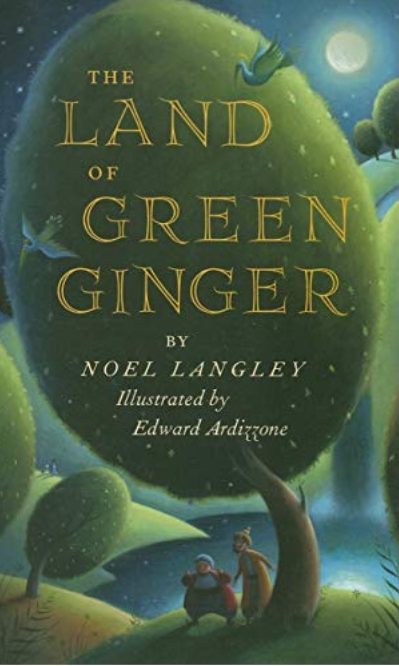
The Collected Tales : Nurse Matilda by Christianna Brand with illustrations by Edward Ardizzone c1964, collected tales c 2005 by Bloomsbury Publishing : New York and London

Mr. and Mrs. Brown had so many incorrigible children that they didn’t seem to know what to do. The Agency had already sent them a lot of nurses, nannies, and governesses, and all had fled because of the terribly, terribly naughty Brown children. There were so many of them that their parents thought of them in groups, from the Big Ones, to the Middling Ones, and on down to the Baby who spoke in its own language. The Tiny Baby was too young to be really naughty yet, so it did not get counted.

What were these naughty children up to? Here are the author’s words:

“Francesca had filled the Tiny Baby’s bottle with baby-food and was feeding the dogs with it.

Little Quentin had drawn flowers all up and down the walls and was watering them from the big, brown, nursery teapot.

Antony was filling up the nursery ink-wells with runny red jam

Sophie was shampooing Hernrietta’s hair with glue.

All the other children were doing simply dreadful things too.”

The Browns had been advised to find Nurse Matilda, but none of the Agencies they visited seemed to have her on their books. It was a surprise to arrive home and find her on the doorstep, ready to begin the lessons that would reform the Brown children. Nurse Matilda was not at all pretty. She had tiny, black eyes, a nose like two potatoes, and a frighteningly huge front TOOTH.

Nurse Matilda also had a big, black stick, and when she brought it down with a loud and firm thump, things began to happen. Magical things that no one could explain. The other thing no one could explain was how Nurse Matilda seemed to be less ugly as the children’s behavior improved. At times she looked almost attractive! There is one rule that governs Nurse Matilda’s time with the families she has helped. When the children don’t want her, she must stay, and if the time comes that they do want her, she must leave. The Brown children are without a doubt the naughtiest Nurse Matilda has encountered, so it looks as though she will be with them for a long while.

Learning to sit up straight in their chairs.

The Nurse Matilda stories were written by Christianna Brand, a successful author of mystery books, and illustrated by her cousin, Edward Ardizzone. Brand and Ardizzone spent lots of time together as children, and heard the first Nurse Matilda stories which were invented and told to them by Edward’s grandmother. Lots of creativity in that family! One of the things to notice about the stories is the number of children. I found the number in an article about the books, but I leave it to readers to discover on their own. The Collected Tales include: Nurse Matilda, Nurse Matilda Goes to Town, and Nurse Matilda Goes to Hospital. I found the three individual books in a bookshop on a trip to York, UK, some years ago, and regret not buying them. Each was bound in a small volume with gilded edges and a sewn-in bookmark. Very attractive to the children’s book collector I turned out to be. The collected tales are currently also available in paperback.

A Pile of Picture Books For Ages 3-5

Colors: A First Art Book by Lucy Micklethwait c2005 by Frances Lincoln Limited : London

It is going to be very hot here today, and the city recommends the libraries as a good place to cool off. Can’t think of a better thing to do than bring out some picture books and settle in for the afternoon. I use age guidelines loosely, as I enjoy a good picture book and it has been a very long time indeed since I was in Mrs. Cook’s kindergarten room. The titles today will eventually be on Book List #2 as a page. Preschool picture books should be eye catching, have few or, in the case of this first title, no characters. There should be repetition, a rhythm to the story, and simple themes. Color books, ABC books, Counting Books, all are welcome, and books that the child can enjoy quietly and alone will build attention spans and prepare the way for reading. Let’s get started…..

In Lucy Micklethwait’s book children are introduced to colors through works of art. After your child has identified the colors in the paintings, a conversation could start about the painting. What is going on in the picture? Who are the people? How would that fruit taste? What sound does that owl make? What other things are yellow?

View from Satta in Suruga Province by Ando Hiroshige (1797-1858) Woodblock Print

A picture list is included at the end of the book. Lots to see here!

Bruno Munari’s ABC by Bruno Munari c1960 This edition published 2006 by Chronicle Books : San Francisco Bruno Munari’s Zoo by Bruno Munari c1963 This edition published 2005 by Chronicle Books : San Francisco

These two oversized picture books by Italian graphic designer Munari bring bold art and humor home to roost. In the ABC book, The page for L depicts a simple green leaf, a long leaf, and a little leaf, and a bright, large lemon. V shows us a Vertical, Violet, Violin with a tiny fly on a Voyage. The illustrations are double-page spreads with plenty of white space around the objects. In the Zoo book, birds are shown seeking shelter from the rain under a double-wide elephant. An arrow sign directing the zoo visitor to the birds points up. There are signs for the monkeys, flamingos, snakes, and ferocious animals. Readers are told that the humpy camel has a seat for them, a spiky porcupine loses himself among equally spiky grasses. Both books are a delight to peruse and will enjoy many return visits from your youngsters.

In the Garden: Who’s Been Here? by Lindsay Barret George c2006 HarperCollins Children’s Books : New York

Two children are sent to the garden by their mother to pick vegetables on a moist summer morning. A walk down the row of tomato plants reveals a nibbled leaf. Readers turn the page to find that a tomato hornworm is the culprit. A crow has been pecking kernels of corn, and a woodchuck has found the carrots. This large format book is a colorful introduction to the garden and its critters. An information page at the back gives a few facts about each animal or insect mentioned in the text. Read this before a visit to your local farmers market.

Blueberries for Sal by Robert McCloskey c1948 The Viking Press : New York

The blueberries are ripening as we speak, and youngsters are looking forward to hearing the kuplink, kuplank, kuplunk of the berries landing in their tin pails. You know this classic summer story about Sal and Little Bear who both love blueberries. July is the time to share this book with somebody, perhaps with some blueberry pie or muffins on the side.

Little White Rabbit by Kevin Henkes c2011 HarperCollins : New York

As little white rabbit hopped along he wondered what it would be like to be green like the grass, or tall like a fir tree. He wondered what it would be like to be still like a rock, unable to move. This very short and simple story is perfect for the youngest listener, and joins many other titles by Kevin Henkes who understands story time very well. If you visit his website at kevinhenkes.com you can hear him read aloud to children.

Gregory, the Terrible Eater by Mitchell Sharmat Illustrated by Jose Aruego and Ariane Dewey. c1980 Scholastic Inc.: New York

Gregory the goat’s parents think he is a fussy eater. Here are the author’s words:

“I’m not fussy,” said Gregory.”I just want fruits, vegetables. eggs, fish, bread, and butter. Good stuff like that.”

Mother Goat stopped eating the shoe. “Now what kind of food is that, Gregory?” she said.

“It’s what I like,” said Gregory.

“It’s revolting,” said Father Goat. He wiped his mouth with his napkin.

Can a bit of reverse psychology help cure a picky eater at your house? My kindergarten students loved hearing about Gregory learning to try new things, like scrambled eggs with a side of waxed paper.

Bedtime for Frances by Russell Hoban with illustrations by Garth Williams c1960 HarperCollins : New York

What delaying tactics are employed when bedtime arrives at your house? Frances the badger knows them all. Longer summer days and warm weather are not conducive to snuggling down and getting to sleep. This bedtime classic will help with any fears of the dark for your not-sleepy-yets.

Telling Our Story, Year 250

The American Spirit by David McCullough c2017 Simon and Schuster : New York

Who better to turn to on this American anniversary than our esteemed historian and eloquent speaker; David McCullough. In this collection of his speeches, Mr. McCullough reminds us of the stories that made us, and the qualities we should strive to keep and encourage in our children, the future of America. Here is an excerpt from a commencement speech at Union College in Schenectady, New York :

“John Adams read everything—Shakespeare and the Bible over and over, and the Psalms especially. He read poetry, fiction, history. Always carry a book with you on your travels he advised his son John Quincy. “You will never be alone with a poem in your pocket.”

“Read. Read. Read! read the classics of American literature that you’ve never opened. Read your country’s history. How can we profess to love our country and take no interest in its history? Read into the history of Greece and Rome. Read about the great turning points in the history of science and medicine and ideas.

Read for pleasure, to be sure….But take seriously-read closely-books that have stood the test of time. Study a masterpiece, take it apart, study its architecture its vocabulary, its intent. Underline, make notes in the margins, and after a few years, go back and read it again.

Make use of the public libraries. Start your own personal library and see it grow. Talk about the books you’re reading. Ask others what they are reading. You’ll learn a lot.”

This advice is lovely to hear if you think our continued liberty depends on our being literate and informed Americans. The speeches in this book include stories about presidents, members of congress, and individuals like the Marquis de Lafayette, Abigail Adams, John Trumbull whose painting of the signing of The Declaration of Independence is familiar to most of us. Meet Benjamin Rush, Charles Sumner, Reverend Manasseh Cutler and many other Americans who all made contributions to building a better life for people then and now. Do consider this book for any recent college grad of your acquaintance.

How About An Adventure? Summer Reading to Take You Away.

Weslandia by Paul Fleischman Illustrated by Keven Hawkes c2002 Candlewick Press

Some children spend summer vacation at soccer camp or on a family trip, but Wesley has a plan. Why not create your own civilization? Instead of hanging around with the schoolmates who torment him, Wesley tends a new crop of strange plants from which he creates special ink for writing a new language, uses the fibers to create cool and comfortable clothing, builds himself a shelter, and names his world Weslandia. New and challenging games are to be invented and creative possibilities present themselves each day. No boredom can exist for long in this fascinating and colorful neighborhood.

Wesley assesses the growth of his flourishing plants.

Journey to the River Sea by Eva Ibbotson Originally published by Macmillan Children’s Books : London c2001

Orphan Maia never dreamed she would be leaving her comfortable London boarding school to live with relatives in Brazil. When her relatives who live on a rubber plantation turn out to be unpleasant and unkind and have no interest in learning about the world of the Amazon river that surrounds them, Maia is very unhappy. Sometimes those who have courage and strength during difficulties are rewarded. New friends and a boat journey on the largest river system in the world bring Maia in touch with new possibilities. Eva Ibbotson takes her readers on an unforgettable trip.

Call it Courage by Armstrong Sperry c1940 Currently available from Simon & Schuster

Teenager Mafatu has always been afraid of the sea. He has been teased and made to feel an outsider by the people on his South Pacific island of Hikueru. In order to redeem himself and make his father, the chief, less ashamed, Mafatu sets out to sea on a small boat with his dog as his only companion. He hopes to conquer his fear once and for all.

This is not a long book, but the story is one of those that lives long in the hearts of readers. It is perfect for ages 9 to 12 and it is an excellent choice to read aloud at home or at school.

The Boys in the Boat by Daniel James Brown Young readers edition c 2015 by Viking Books for Young Readers also available from Puffin Books

The true story of the team that rowed to victory for America at the 1936 Olympics. No one expected that a crew of young men from Washington State would outperform the Ivy League teams from the Eastern US, let alone win at the Olympics. The story of how they got there is inspiring and uplifting and belongs on any list of books for students. I played the footage of the actual boat crossing the finish line for my classes when I book talked this at book fairs. It is always a winner!

Endurance by Alfred Lansing c1959 by McGraw-Hill Book Company : New York

The story for which the word EPIC was invented! Most junior high readers can enjoy this true tale of survival under extreme conditions during a Polar expedition to the Antarctic in 1914. That 28 men could live through the loss of their ship without any of the modern technologies we know today is one of the most remarkable survival stories of all time, and a testament to the difference good leadership can make. Expedition leader Ernest Shackleton made the men get rid of most of their possessions when they prepared to take to the ice as their ship began to be crushed, but he kept the banjo. He knew his crew would need every possible help to take their minds off the dire situation they were in. He also knew that in the days leading up to WWI, nobody was going to be interested in coming to their rescue. They had to save themselves. This is the story of how they did it. If your teenagers do not know this story, why not get them acquainted with Shackleton and his brave companions?

The Dangerous Book for Boys by Conn and Hal Iggulden c2006 by HarperCollins

A classic How-To book that covers building a treehouse, skimming stones, the five knots every boy should know, identifying fossils, basic fishing skills, and more ideas for enjoying life outside. There are also many useful lists and documents such as baseball’s most valuable players, a Navajo code talkers dictionary, The Declaration of Independence, and the Ten Commandments, least we forget a few. This book will help your young lads adventure well this summer.

Lost on a Mountain in Maine by Don Fendler and Joseph Egan Original c1939. Republished in 2013 by Harper Collins

Another true survival story. When he was twelve years old, Don Fendler became lost during a hike on rugged Mount Katahdin and managed to survive alone until he was found on day nine. Mount Katahdin is famous for being the northern endpoint of the Appalachian Trail. It is a strenuous and difficult hike with extreme weather changes, not a good place to lose your way. This book is a good companion to the Dangerous Book for Boys. Be prepared, as the scouts say.

The River by Gary Paulsen c1991 Dell Publishing / Random House Children’s Books

The first sequel to Hatchet by Gary Paulsen. Brian returns to the wilderness with a psychologist to teach survival skills, but must navigate a raft downriver after his companion is injured in a storm. Gary Paulsen is THE young person’s wilderness adventure writer. The Hatchet series is probably the best known of his books, but there are shelves more to be enjoyed. I have given his book Winterdance : The Fine Madness of Running the Iditarod to outdoor fans in my family. Mr. Paulsen ran the Iditarod twice, and his tale of that experience as a rookie is enlightening, and a bit crazy.

What Holiday Approaches? Enjoy a classic with Charlotte Zolotow and Garth Williams.

Over and Over by Charlotte Zolotow with pictures by Garth Williams c1957 renewed 1985. Published by HarperCollins : New York

Once there was a girl so little she didn’t know about the seasons or the days of the week. Christmas trees and pumpkins were all mixed up in her mind. Her mother helps her know which special days to expect as the year unfolds.

I read this to the kindergarten classes and it always held their rapt attention. Nothing looms bigger than the next holiday or birthday in elementary school! Who better to write and illustrate the story than the team of Zolotow and Williams? This book will get requests, you can bet on it.

Emily’s Balloon by Komako Sakai

Emily’s Balloon by Komako Sakai c2003 Chronicle Books : San Francisco

Emily’s new,bright,yellow balloon is more than a toy; it is a friend to share her days and nights. There are issues with such lighter-than-air companions.

Fortunately,there are also solutions, which Emily’s clever mom employs to save the day. This picture book is all about simplicity and childhood pleasures adults will enjoy remembering when they share this book. It is a lovely choice for settling somebody down at bedtime.

Mrs. McNosh and Friends—-Books to Share with Ages 3-5

Mrs.McNosh Hangs Up Her Wash by Sarah Weeks with illustrations by Nadine Bernard Westcott c1998 Harper Collins

Here are a few books that four and five-year-old children enjoyed at story time. Most of them are suitable for younger children as well. My story programs with the four-year-old group lasted for 20 minutes and usually included some attention building nursery rhymes that might be sung or had accompanying actions. Today’s titles will appear on a longer reading list as a page soon, but with just the titles and authors, which should make it easy to print the list should anyone wish to. Picture books for older children will have their own lists, so stick around!

Mrs. McNosh does a big wash every Monday morning. Here are the author’s words:

“It takes her all morning, and when the sun’s high, she hangs what she’s washed on the clothesline to dry.”

Once Mrs. McNosh gets going there is no stopping her. All sorts of things besides laundry begin to appear. The dog, with his dish takes his place on the line, then a lamp, next two bats, which get hung upside-down. This brief, rhyming story will probably need to be read again because your audience will want more.

Wow! Said the Owl written and illustrated by Tim Hopgood c2009 Farrar, Straus and Giroux : New York

When a little owl decides to stay awake during the day, she experiences awe as colorful butterflies, green leaves, blue skies, and fluffy white clouds appear. The double page spreads in this book provide luscious expanses of bright color which just might elicit a “wow!” from viewers. Follow it up with a discussion of colors your audience has noticed indoors and out, and some paper and crayons.

Minerva Louise written and illustrated by Janet Morgan Stoeke c1988 Penguin Young Readers : New York

Minerva Louise is a curious chicken. The house with the red curtains attracts her, so when a window is left open she decides to investigate. Since she is a creature of the farmyard, she is confused by some of the things found in a house. Could logs laid for a fire in the fireplace be a cozy nest? A tricycle looks like a tractor to Minerva Louise, and a flowered bedspread must be a meadow of flowers, that cat sleeping on the sofa could only be a cow…The large, simple pictures and brief text make this suitable for very young children. There are more stories featuring the adventures of Minerva Louise, and they are all just as funny and full of charm.

Grump Is His Name… The Midsummer Tomte and the Little Rabbits

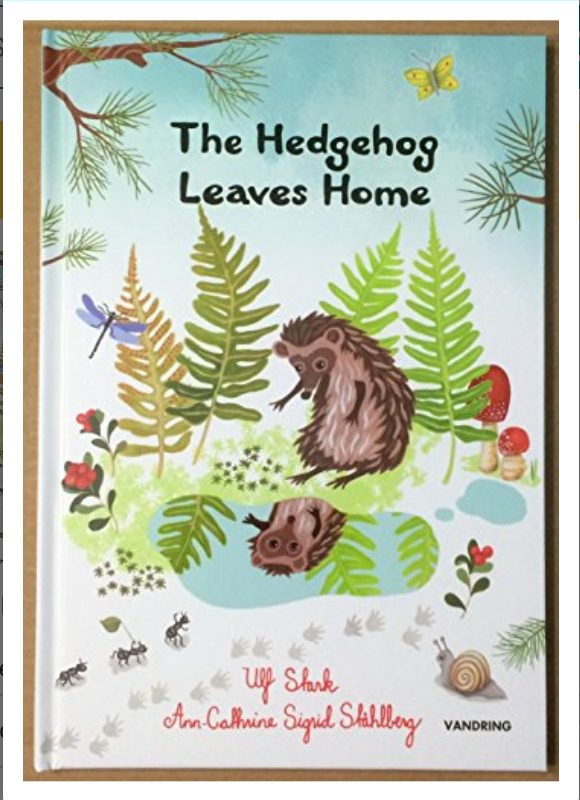
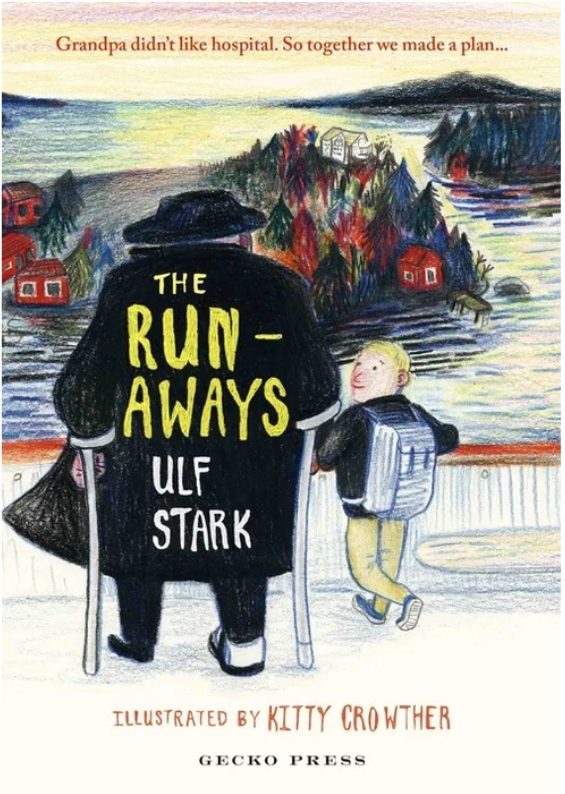
The Midsummer Tomte and the Little Rabbits by Ulf Stark with illustrations by Eva Eriksson English edition c2016 by Floris Books : Edinburgh

Grump is a house tompte. He lives in a dog kennel converted into a cozy home just the right size for a small being, and he looks after a cottage long empty of its happy family. His best friend is a bumblebee. Here are some of the author’s words:

“His friend the bumblebee was flying around looking for flowers that had come into bloom. It swooped over the nettles beside the pigsty.

“Soon it will be time to leave and find a home of my own,” thought the bumblebee.

Every time it mentioned leaving, Grump grunted and said it was too soon for that. “What are you thinking of, you bumblenoodle? There aren’t enough flowers yet. You’ll starve.” Then Grump sighed. “No, I’ll have to put up with you a bit longer, you nuisance.”

The bee looked down at the tompte and wondered, “How will I have the heart to leave the old crosspatch? He saved my life once. I don’t want to make him sad.”

Grump and Bumblebee have a serious chat. Illustration by Eva Eriksson

Grump knows that a house tompte should be a bit grouchy, but sometimes he forgets and ends up doing very kind and thoughtful deeds. A large and noisily happy rabbit family nearby has benefitted from having Grump in the neighborhood, and this summer will be no different.

Father Rabbit is very proud of his top hat and wonders if an event called Midsummer might provide a chance to show it off, if only they knew how to celebrate it. Barty wonders if a tree is decorated. Grandfather wants to know if there are speeches given or poems written. Mother thinks dancing would be nice. Everyone hopes there will be tasty food to eat. Owl warns them that Midsummer is “Full of magic and love and mystery, so it’s best to watch out!”

So much can happen in the long days leading up to Midsummer’s Eve. There are storms, lots of time to play rabbit games, Grandfather’s lessons, perhaps even time to fall in love….There are 21 short chapters in this lovely book, perfect for reading one each bedtime right up to Midsummer’s longest day. Warm and gentle humor and scenes from happy family life are found throughout this story. It doesn’t matter that the family might be rabbits or mice. The characters are so like people you might know. Eva Eriksson’s pictures and page decorations make this a beautiful book to own.

Grandfather Rabbit teaches a lesson on plants, edible and otherwise. Illustration by Eva Eriksson

Grump turns to his “one and best book” In Praise of Solitude for solace when his friend leaves and learns that becoming attached to things leads to disappointment when they leave. Perhaps he will change his ways, or maybe the future will be better than he thinks. Better read this book and find out. The Yule Tomte and the Little Rabbits by the same two collaborators will be waiting for your young readers come Advent season. That is good news indeed.

Poor Behavior in the Dollhouse–The Tale of Two Bad Mice

The Tale of Two Bad Mice by Beatrix Potter c1904 Frederick Warne and Co.

Once upon a time two mice visited a very beautiful doll’s house. Tom Thumb and his wife Hunca Munca called, but no one was at home. The door was not secured, the mice entered, and discovered to their joy a plentiful feast laid out in the dining-room. There was a ham, a pudding, and other wonderful things. The ham was impossible to carve and eventually broke off the plate and rolled under the table. The meal was turning out to be very difficult to enjoy. Perhaps there are other items in the house to interest the parents of a growing mouse family. Will they make things right with Lucinda and Jane, the rightful owners and residents?

The Tale of Two Bad Mice is number 5 of Beatrix Potter’s 23 Original Peter Rabbit Stories. Frederick Warne & Co. made fresh reproductions of Beatrix Potter’s illustrations for the whole series in 2002. These books are small handheld works of art and no children’s home library is complete without a few of them. The Tale of Two Bad Mice is my favorite after the Tale of Peter Rabbit. The picture of a frustrated Tom Thumb dealing blows to the plaster foods with a mouse-sized fireplace shovel is priceless.

Illustration from “The Tale of Two Bad Mice” by Beatrix Potter

It is the incomparable and meticulously prepared art that make Beatrix Potter’s books come to life. Children who get to know these stories are getting acquainted with beauty, and quite a lot of humor!